



Published 4 January 2016 · Older article — see current rates
A secured loan — often called a second-charge mortgage — is borrowing taken out against a property you already own, alongside the mortgage you already have. Your existing mortgage stays exactly as it is; the new loan sits behind it, secured against the same home. People consider this route to raise money for home improvements, to bring other debts together, or when remortgaging the whole loan would not suit their situation.
This guide explains what a second charge is, how it differs from a remortgage or a further advance, when it might be the better fit, and the real risks of borrowing more against your home. It is written to inform, not to push you in any direction.
This page is information, not advice. It does not recommend a particular product or course of action for you. For a personal recommendation based on your own circumstances, please speak to a qualified adviser at Niche Advice Limited. We are a mortgage and credit broker, not a lender — authorised and regulated by the Financial Conduct Authority. We do not make the decision for you and we do not promise any particular outcome.
What this guide covers
A “secured loan” is an umbrella term, so the sections below walk through the main routes and situations:
- What a second-charge mortgage actually is — and how it differs from a remortgage
- First charge vs second charge — what “first” and “second” mean in practice
- When a second charge may suit better than a remortgage
- Funding home improvements with secured borrowing
- Debt consolidation using a second charge — with an important warning
- Options where there is adverse credit
- The risks, set out plainly
Each section is short and scannable. None of the figures below include interest rates, monthly payments or product fees — those depend entirely on your circumstances and change constantly. Where a rate would go, speak to a qualified Mortgage Adviser for a current quote.
What a second-charge mortgage actually is
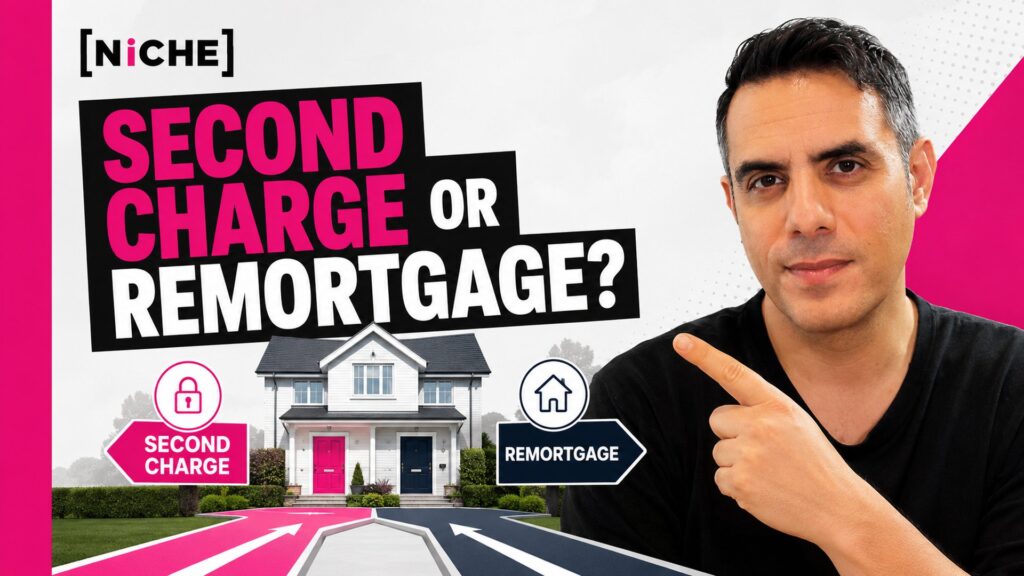
When you take out your main mortgage, the lender registers a first charge over your home. That gives them the first claim on the property if it ever has to be sold to repay the debt. A second-charge mortgage is a separate, additional loan from a different lender, secured against the same property — and it sits in second place behind your existing mortgage.
In plain terms: you keep your current mortgage untouched and borrow a further amount on top, with your home as security for both. The first lender is repaid first from any sale; the second-charge lender is repaid after that. Because the second-charge lender is taking on more risk by being second in line, the terms reflect that.
How much you can borrow depends largely on the equity in your home — the share of its value that is not already mortgaged — and on each lender’s loan-to-value (LTV) limits, which cap total borrowing as a percentage of the property’s value. Affordability matters too: lenders assess whether you can comfortably meet both your existing mortgage payment and the new one.
First charge vs second charge: what the order means
The “charge” is simply the legal claim a lender holds over your property. The order matters because it sets who gets repaid first if the home is sold to clear the debt.
- First charge — your main mortgage. It has priority.
- Second charge — the secured loan that sits behind it.
You do not need your first lender’s product to change for a second charge to be arranged, but in many cases their consent is required, and an adviser will check that for you. The key point to hold on to is this: a second charge means you now have two borrowings secured against the same home, each with its own balance, term and monthly payment. Both must be kept up.
Second charge vs remortgage vs further advance
There are usually three ways to raise money against a home you already own. They are genuinely different, and none is automatically “best”:
- Remortgage — you replace your whole existing mortgage with a new, usually larger one (with your current lender or a new one) and release the difference as cash.
- Further advance — additional borrowing from your current lender, on top of your existing mortgage, without switching lender.
- Second-charge mortgage — a separate loan from a different lender, leaving your existing mortgage exactly as it is.
A second charge keeps your current mortgage deal in place. That is often the deciding factor.
When a second charge may suit better than a remortgage
A second charge is not the default answer — but there are situations where it can be a sensible alternative to remortgaging the whole loan. It may suit when:
- Your existing mortgage has a deal you do not want to lose. If you are partway through a fixed deal you are happy with, remortgaging could mean giving it up and moving onto whatever is available now. A second charge leaves it intact.
- Leaving your current deal early would trigger an early repayment charge (ERC). Disturbing the main mortgage could cost you; borrowing separately on a second charge avoids touching it.
- A further advance is not available or not suitable. Your existing lender may not offer additional borrowing, or may not lend the amount you need on terms that fit.
- Your circumstances have changed since you took the main mortgage. A change in income, employment status or credit history can make a fresh full remortgage less straightforward, and a second-charge lender may take a different view.
- You want to keep the borrowing separate — for example, raising money for a specific purpose without reshaping your main mortgage.
None of these makes a second charge the right choice on its own. They are reasons it is worth comparing properly against a remortgage and a further advance, which is exactly what an adviser can do for you.
Funding home improvements
One of the most common reasons people take a second charge is to fund home improvements — an extension, a new kitchen or bathroom, a loft conversion, or energy-efficiency upgrades — without disturbing a main mortgage they want to keep.
A potential upside is that some improvements may add to the value of your home, though that is never certain and depends on the work, the property and the market. Borrowing for improvements is still borrowing secured against your home, so the same care applies: the loan increases the total amount secured on the property, and the term affects what you repay over time.
An adviser can help you understand how much you might be able to release within lenders’ LTV limits, and whether a second charge, a further advance or a remortgage is the more sensible way to fund the work.
Debt consolidation with a second charge
A second charge is sometimes used for debt consolidation — borrowing against your home to pay off other debts such as credit cards, personal loans or car finance, bringing several payments together. It can ease monthly pressure, but it carries real risks that deserve the same prominence as any benefit.
Important risk warning. Consolidating debt into a secured loan may extend the term over which you repay it, which can increase the total amount you repay overall — sometimes substantially — even if your monthly payment goes down. It also converts previously unsecured debt (such as credit cards or personal loans) into debt secured against your home or property.
Your home or property may be repossessed if you do not keep up repayments on a mortgage or other debt secured on it.
A few points to weigh carefully before consolidating against your home:
- You may pay more in total. Lowering a monthly payment by stretching debt over a longer term often increases the overall amount repaid.
- You are securing unsecured debt against your home. A credit card or personal loan is not secured on your property; once consolidated into a second charge, it is.
- It is not a cure for the underlying cause. Consolidation reorganises debt; it does not, by itself, change spending habits or income. If the spending that created the debt continues, you can end up with the secured loan and new unsecured debt on top.
If you are struggling with debt, free and impartial help is available from organisations such as MoneyHelper, StepChange and Citizens Advice. Speaking to one of them — or to a qualified adviser — before committing to secured borrowing is a sensible step. Think carefully before securing debts against your home or property.
Options where there is adverse credit
If your credit history is impaired — perhaps a default, a County Court Judgment (CCJ), missed payments, or a period of financial difficulty — you may worry that a second charge is out of reach. It is not necessarily so. Second-charge lenders vary widely in how they assess applications, and some are set up to consider circumstances that a mainstream first-charge lender might decline.
What tends to matter most is:
- The equity in your home — a lower LTV gives a lender more comfort.
- How recent and how serious the credit issues are — older, settled issues are usually viewed differently from very recent ones.
- Your wider affordability — whether you can comfortably meet both the existing mortgage and the new loan.
- The reason behind the credit problems — context can matter to a lender.
There are no promises here. Options and terms vary from lender to lender, and a second charge with adverse credit will be assessed on its own facts. We cannot guarantee that any lender will accept an application, and we do not promise a particular rate or outcome. What an adviser can do is look at your circumstances, explain what is realistic, and — just as readily — tell you when borrowing more against your home would not be the right move.
The risks, set out plainly
We want these to carry the same weight as any benefit:
- Your home or property is on the line. A second charge adds a further borrowing secured against your property. Your home may be repossessed if you do not keep up repayments on a mortgage or other debt secured on it.
- You will have two secured payments. Your existing mortgage and the second charge each have their own term and monthly payment. Both must be maintained.
- A longer term can mean more interest overall. Spreading borrowing over many years can increase the total you repay, even where a monthly payment looks manageable.
- Fees and charges may apply to setting up the new borrowing, and you should understand all costs before committing.
- It does not fix the underlying cause of any financial pressure on its own.
A second charge is not inherently better or worse than a remortgage — it depends entirely on your figures and your goals. The honest answer for many people is that it suits, and for others it does not, and the only way to know is a proper comparison.
Where a broker fits in
As a mortgage and credit broker, Niche Advice Limited helps you understand the routes available, gathers your circumstances, and looks across the options to find arrangements that may fit. We do not lend the money ourselves, and we do not make the decision for you. What we do is help you weigh a second charge against a remortgage and a further advance — and, just as readily, help you see when borrowing more against your home may not be the right move at all.
Because a second charge is a significant decision that puts your home at stake, we treat it carefully. A recommendation only comes after a proper conversation about your goals, your budget and your wider plans.
Frequently asked questions
What is the difference between a remortgage and a second-charge mortgage?
A remortgage replaces your whole existing mortgage with a new one, usually larger. A second charge is a separate, additional loan from a different lender that sits behind your existing mortgage, which stays exactly as it is. They are genuinely different routes, and the right one depends on your circumstances.
Why might a second charge suit me better than remortgaging?
Often because you do not want to disturb your existing mortgage deal — for example, if it is competitive, or if leaving it early would trigger an early repayment charge. A second charge leaves the first mortgage in place. Whether it is actually the better route for you needs a proper comparison.
Can I get a second charge if I have adverse credit?
It may be possible depending on the lender, the equity in your home, how recent the credit issues are and your wider affordability. Options and terms vary, and we cannot promise that any lender will accept an application. The way to find out what is realistic is to discuss it with an adviser.
Is a second-charge mortgage regulated by the FCA?
A second charge secured on your own home is a regulated mortgage contract, and it carries the same repossession risk as your main mortgage. That is precisely why advice matters — and why this page sets the risks out alongside the benefits.
Do I need my existing lender’s permission?
In many cases the first-charge lender’s consent is required for a second charge, and an adviser will check this as part of looking at your options.
Will a second charge lower my monthly outgoings?
It can in some cases, particularly when used to consolidate more expensive debt over a longer term — but a lower monthly figure often means a longer term and a higher total cost over time. Whether it helps depends on your figures. Speak to a qualified Mortgage Adviser for a view on your situation.
If you are thinking of consolidating existing borrowing you should be aware: i) Higher Rates: That the consolidation may involve a higher rate of interest or charges. ii) Longer Term: That the overall repayment period is likely to increase, meaning more interest is paid over time – so even if the monthly payment goes down you could end up paying more in the long run. iii) Security Risk: It converts previously unsecured debt (such as credit cards or personal loans) into debt secured against your home or property.